
Smart solutions for
safe storage of insulin
Wherever & whenever
Let go of your
temperatures
worries.
Store your insulin in
our self-cooling insulin
bag, together with our
smart temperature
sensor.
Shop your solution

How to Use InsulinSaver in 3 simple steps
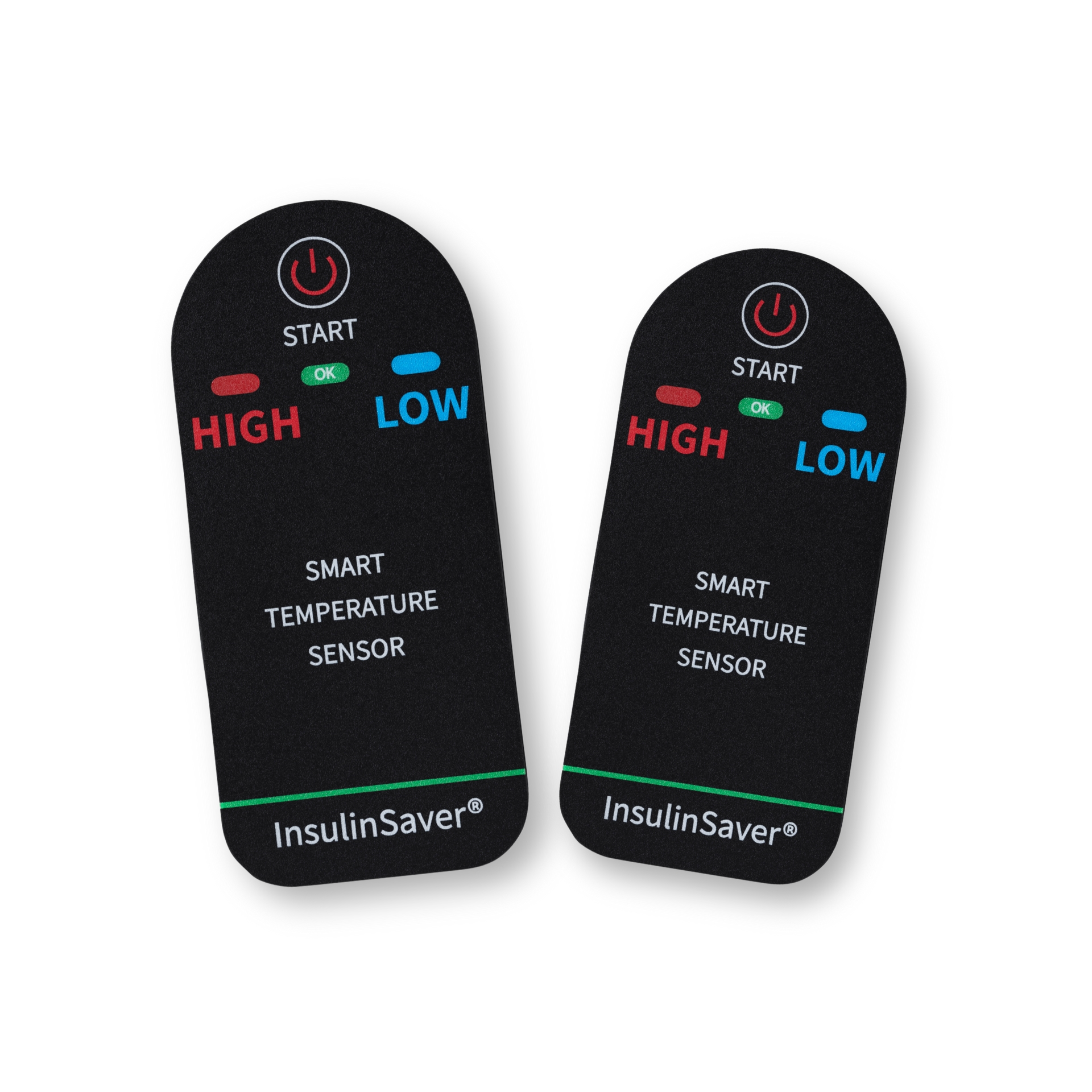
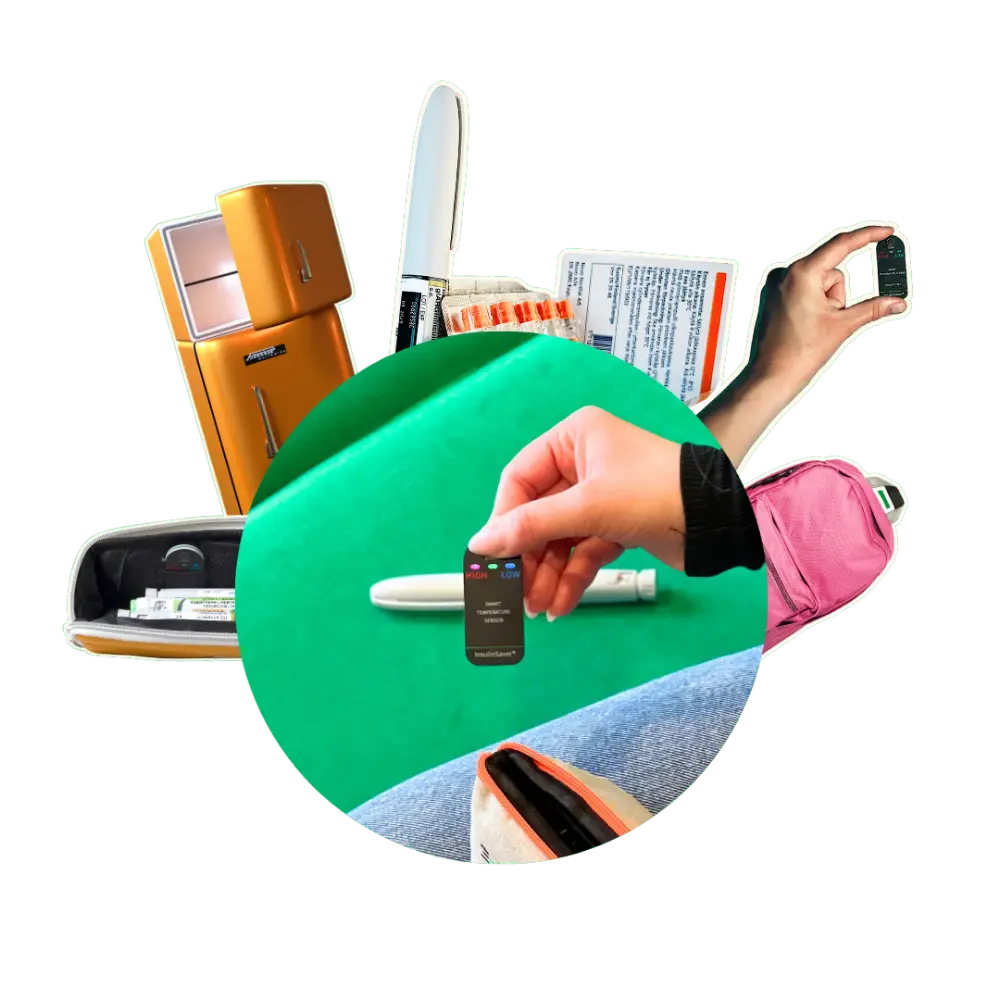
- Press the button to activate the InsulinSaver.
- Place it next to your insulin pens or cartridges.
- No light = All good. Flashing light = take action!

How to use The Bag in 3 simple steps
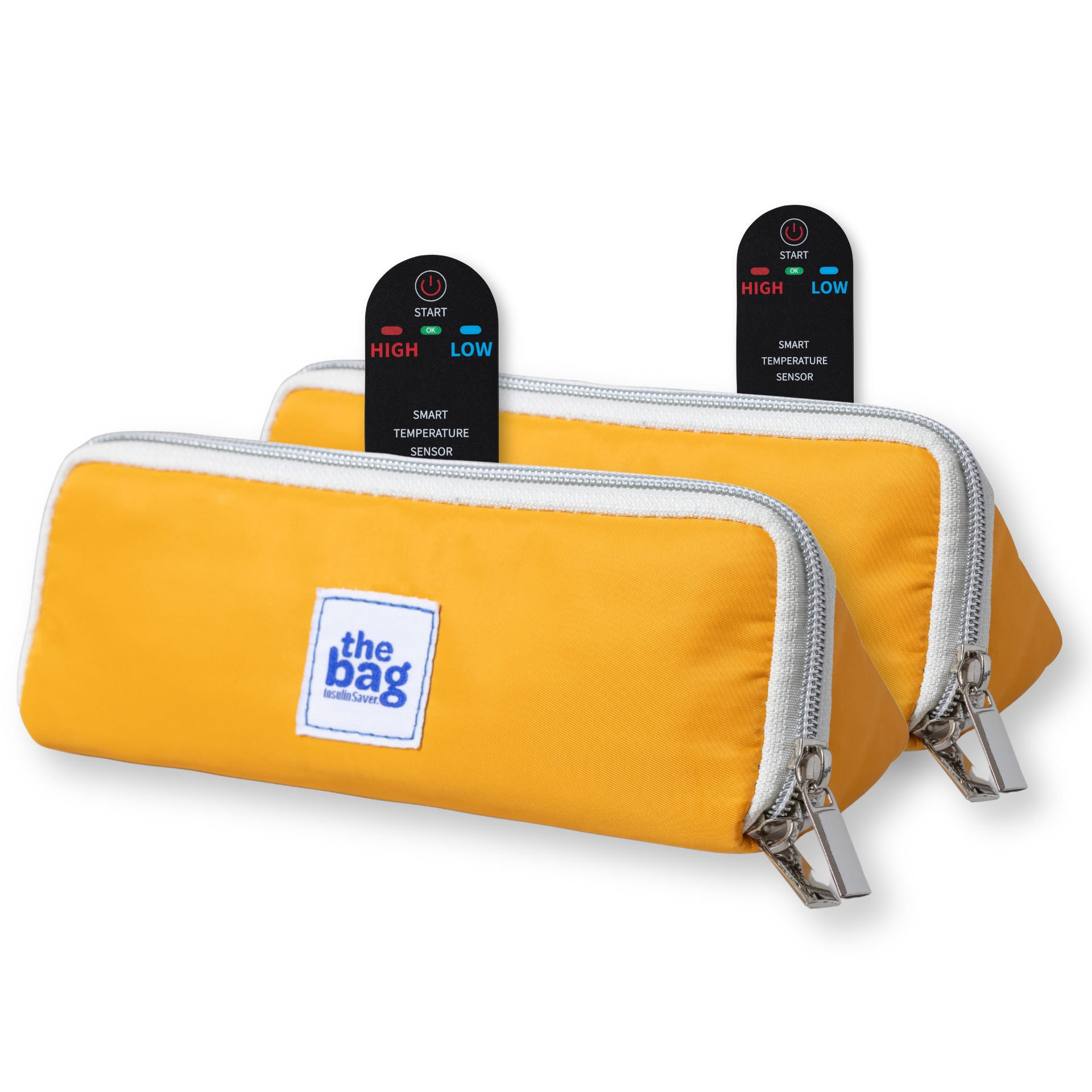
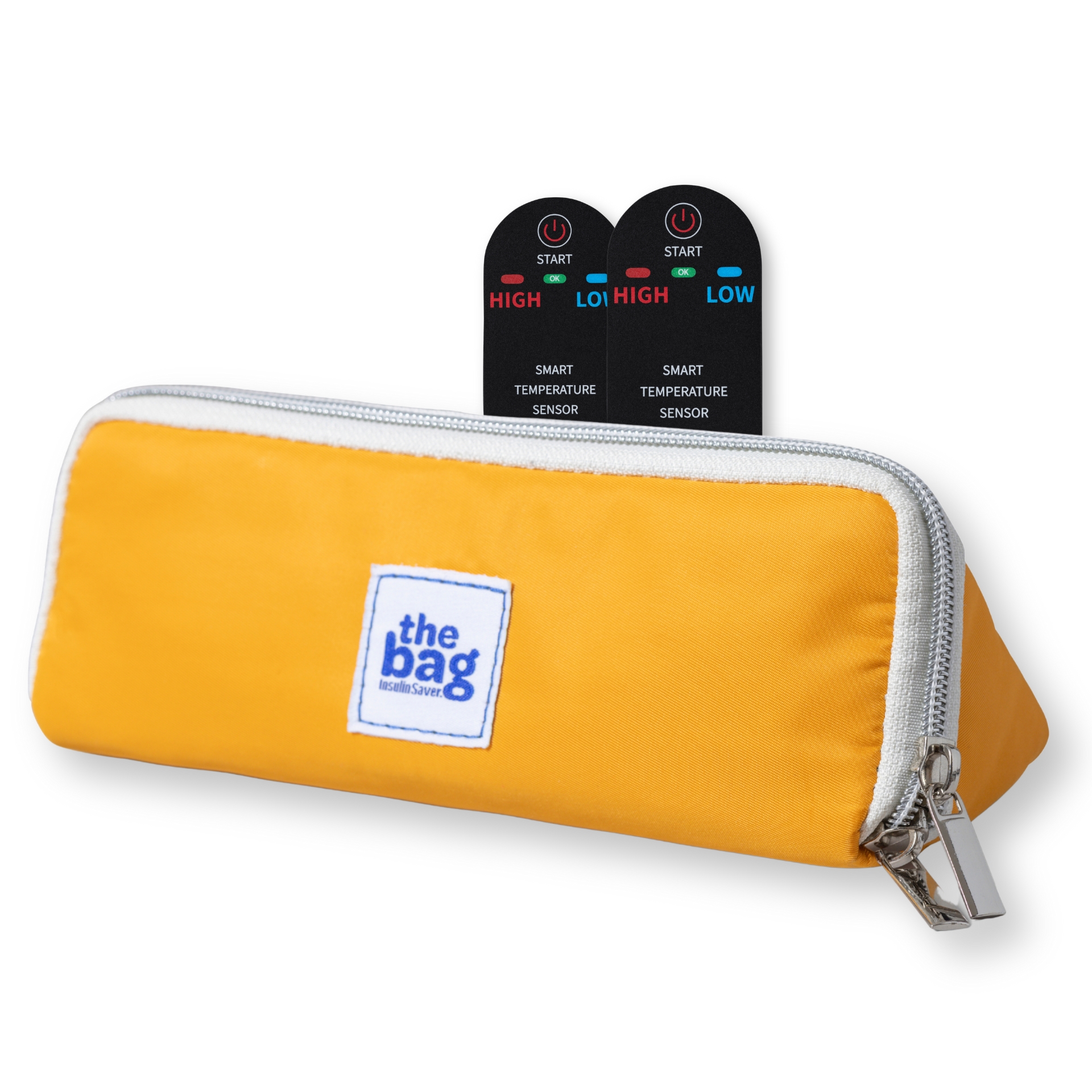
- Place your insulin and needles in the bag.
- Close it.
- No other steps, just grab it and go! Your insulin will be kept safe for the entire day.
What Our Users Are Saying

An invention based on experience.
During a train ride in Europe in the summer of 2017, I left all my insulin in a fridge in a hotel room in Italy. We stayed in Italy for two nights and a few days later, when I changed my insulin in my syringes to the insulin that was in this fridge, my blood sugar started to rise.
I gradually started increasing my doses, first a few units, in the belief that I might have an infection going on. I gradually got worse and worse. I felt dehydrated, had a headache, nausea and I was dizzy. When I had doubled the normal doses, but still had high blood sugar, my travel partner and I began to think about where I had stored my insulin during the trip. My travel partner had noticed that a bottle of juice standing in the door of the fridge in Italy was icy on one morning. My insulin had been lying next to the juice.
If I had an InsulinSaver during this trip, I would have gotten an indication that my insulin had been exposed to too low a temperature before my body would have had to suffer.
- Hanna Dahl, Co-Founder.
FAQ
You should use an InsulinSaver to increase your confidence and security in how you store your insulin, reducing the risk of using ineffective or inactive insulin. Pharmaceutical companies and insulin retailers maintain strict cold chains that must not be broken. Once you pick up your insulin, that cold chain is broken, and you become responsible for ensuring it is stored at the correct temperature.
This can become a source of concern, since you cannot visually determine whether insulin has gone bad. Often, the only indication is a rise in blood sugar — but elevated blood sugar can be caused by many different factors.
That’s why you should use an InsulinSaver: it helps you determine whether a change in your blood sugar is related to your insulin’s storage conditions or something else.
The Bag uses a self-activating phase-change cooling gel that maintains a safe, room-temperature environment for insulin when the outside temperature rises above 25 °C.
Unlike many competitors, it requires no soaking, freezing, batteries, or charging—just place your insulin inside and go. It is designed for everyday use with space for insulin pens, supplies, and an optional smart temperature sensor, and it is built for long-term durability with a lifespan of 10+ years.
This makes The Bag a low-maintenance, reusable, and fully passive cooling solution compared to evaporation-based pouches or products that rely on ice packs or pre-cooling.
The temperature ranges are developed based on the recommendations of insulin manufacturers, as well as research on insulin stability concerning temperature over time.
Store your InsulinSaver in the same place as your insulin — in your pen case, cooler bag, refrigerator, or wherever you normally keep it. Place InsulinSaver as close to your insulin as possible to accurately monitor its storage conditions.
By using InsulinSaver, you’ll gain a better understanding of how to store your insulin properly and with confidence.
When we developed InsulinSaver, our goal was to create a reliable product people can truly trust. Using a user-replaceable battery would require a removable cover, making the device larger and less convenient to fit into pen cases, pump bags, and other compact storage.
We also wanted to eliminate the risk of loose batteries or moisture entering and damaging the contacts. In addition, we designed InsulinSaver to operate independently — without cords, apps, or additional accessories.
Today, we guarantee a battery life of up to 12 months.
For more information and to purchase a replacement, please visit Battery Replacement
If your bag appears bulky or wrinkled upon arrival, don’t worry – this is perfectly normal and can happen during transportation.
Simply heat The Bag to around 50 °C (120 °F) for about two hour, until the material becomes soft and formable.
Form the material and leave The Bag to cool down with the zipper open.
Once cooled, your bag will hold its intended shape. You can repeat this process any time you want to reshape it again.
Ice packs can overcool insulin and cause it to freeze or fall below its safe temperature range, which permanently reduce its effectiveness—even after it thaws. Research shows that overcooling can happen very quickly. They can also create uneven temperatures and condensation, increasing the risk of moisture damage.
Because you can’t visually tell if insulin has been compromised—and rising blood sugar can have many causes—InsulinSaver helps you determine whether changes may be related to how your insulin has been stored.
In the News
StartUp Health (English) article “Goodbye Wasted Insulin: InsulinSaver Helps People with Diabetes Keep Their Medications Effective” about InsulinSaver
Leva med Diabetes (Swedish) article about InsulinSaver
Dragons’ Den (Swedish) TV-show with InsulinSaver
MedTech Magazine (Swedish) article “Patient och pionjär – hennes uppfinningar ska rädda insulinet” about InsulinSaver and The Bag
IT-Hälsa (Swedish) article “InsulinSaver hjälper idag diabeteiker världen över” about InsulinSaver
Innovatum (Swedish) article “InsulinSaver nominerade till Årets startup” about InsulinSaver
smartasaker (Swedish) article “Från personlig utmaning till global inovation” about Hanna Dahl
Diabetes-kids.de (German) article “Kennt igr schon den InsulinSaver..” about InsulinSaver
Sandy’s Diabetes Loop (German) video “Post aus Schweden – ein spannendes neues Produkt für Diabetiker!” about InsulinSaver
Made with Sweden

What do we mean by “Made with Sweden”?
At InsulinSaver, “Made with Sweden” reflects how we create our products — combining Swedish innovation, practical engineering, and user-focused design with trusted global collaboration. Our solutions are developed and designed in Sweden, inspired by Scandinavian simplicity, reliability, and sustainability, while manufacturing and supply take place together with carefully selected international partners.
For us, “Made with Sweden” means bringing Swedish thinking to global challenges — creating smarter, practical solutions that make everyday life easier and safer.


